
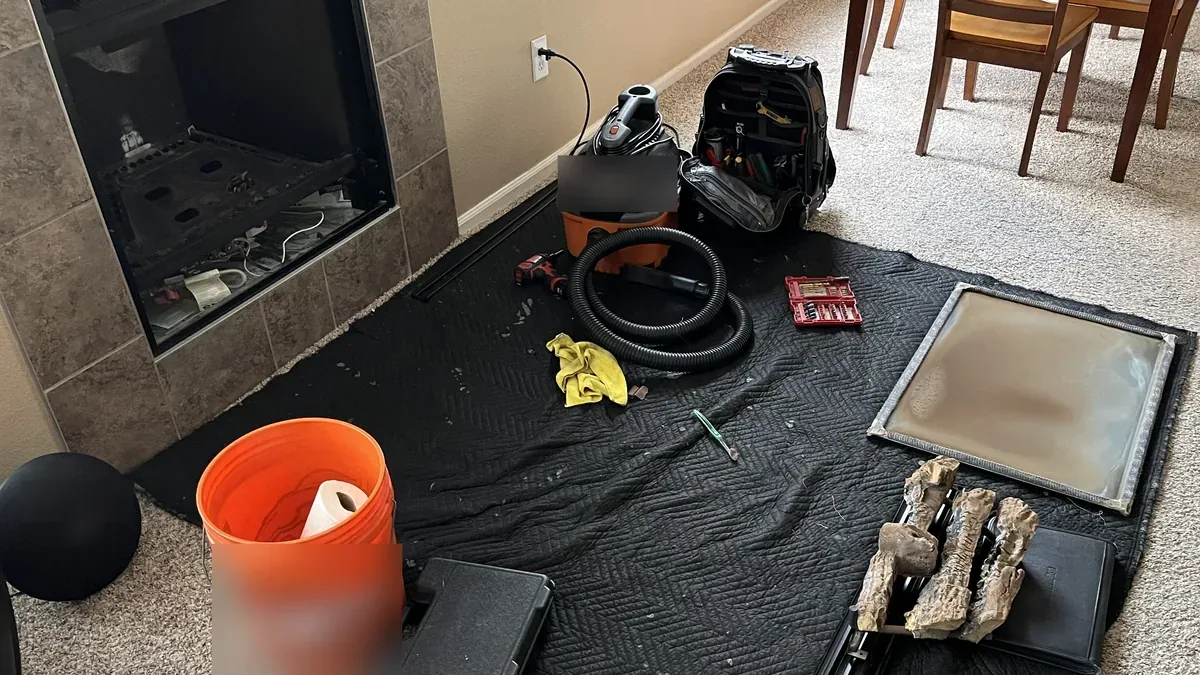
If your gas fireplace worked when you last used it, it is reasonable to wonder what an annual inspection will add. We want to answer that clearly. The visit gives us a chance to check how the fireplace operates, clean what needs cleaning, and explain any concern before you start using it regularly again.
We provide gas fireplace maintenance in Firestone and Dacono. When planning a visit, start with the manufacturer’s schedule and your own plans for using the fireplace. You do not have to wait for it to stop working. You also do not need to assume that every inspection will turn into a repair.
We start with what you have noticed
Before we begin, we want to hear about the last season. Did it take more than one try to start? Did the remote become unreliable? Did the glass develop a film that kept returning? Even if the fireplace is working at the appointment, those observations help us know where to focus.
Then we identify the model and check it against its requirements. Napoleon, Town & Country, and Montigo fireplaces can use different ignition systems, controls, and approved components. We do not apply one checklist without accounting for those differences.
A visit should leave you understanding the condition of your fireplace. If we need further testing or find something outside the agreed appliance-service scope, we will explain that rather than leave you with an unclear result.
What the operating checks tell us
Depending on the model, we evaluate the ignition sequence, pilot assembly, burner operation, flame appearance, controls, and relevant safety devices. We want to know whether it starts correctly, stays running, and responds as it should.
The inspection also considers accessible appliance-side fuel components within the service scope. That is not a complete inspection of concealed piping or other building systems. If a finding needs separate evaluation, we will explain what needs attention. An annual appointment is never a substitute for emergency help when a leak is suspected.
Where the fireplace uses venting, we check accessible areas for conditions that could affect operation. We will be clear about what we could inspect and what we could not. A concern in an inaccessible area needs its own next step, not an assumption that everything beyond view is fine.
Glass, logs, and appearance deserve attention too
We care about how your fireplace looks, but appearance can also give us useful information. A routine film on the glass and unexpected soot may call for different responses. If a deposit keeps coming back, we want to understand the cause before treating it as another cleaning job.
We check the glass assembly, gasket, logs or media, and interior components as the model requires. Log placement can affect flame behavior and combustion, so leave those pieces where they are. Please do not rearrange them to change the look of the flame.
Cleaning takes place after the fireplace has cooled and the required isolation steps are complete. We follow the manufacturer’s procedure for cleaning and reassembly. A clear glass front is a welcome result, but we also need to know that the fireplace is operating correctly.
When a routine visit finds a repair
Sometimes the fireplace needs service and cleaning, with no component replacement recommended. Other times, we may find an ignition, control, gasket, or other appliance issue that needs attention.
If we find a repair, we stop and explain the estimate before proceeding. We will talk through what the work addresses and whether the fireplace should stay off until it is complete. On an older model, parts availability can affect the options, so we check that rather than promise that every component can be sourced.
An inspection is a record of conditions at that visit. It cannot guarantee that no part will fail later. Keep the findings with your fireplace records so there is a clear history if something changes.
Problems that should not wait
Stop using the fireplace and arrange evaluation for delayed ignition, repeated shutdowns, new soot, damaged glass, or a significant change in operation. Do not keep restarting it to work around a fault or operate it with a cracked or improperly fitted glass front.
If you smell gas or suspect a leak, leave immediately, even if the odor is faint. Do not operate switches or controls, use a phone, or create a flame indoors. Do not delay leaving to find the source or shut off a valve. From a safe place outside, call the gas utility or 911 and stay out until cleared. CenterPoint Energy’s gas-safety guidance explains the need to avoid ignition sources.
If a CO alarm sounds, move everyone outside immediately, call 911 or the fire department, and wait for responders’ permission to return. Do not investigate first. Follow the CPSC’s CO-alarm guidance. Smoke, fire, or immediate danger also calls for evacuation and 911.
Before we arrive
Have your remote and any available model information ready, clear access, and let the fireplace cool. Leave logs, glass, and panels in place. Tell us what you have noticed without running it again to demonstrate a concern.
At Elevation, our job is to help you understand what your fireplace needs. We will explain the findings, talk through recommended work, and help you plan the next step before you rely on it more often.
To discuss your fireplace’s next service and inspection, contact Elevation or call 303-591-2978. Share the model if you have it and any changes you noticed between visits.